SleepFM: Stanford's AI That Predicts 130 Diseases While You Sleep
An artificial intelligence model analyzes a single night of sleep to predict your risk of dementia, heart attacks, Parkinson's and over 130 diseases.
One night of sleep. That’s all it needs.
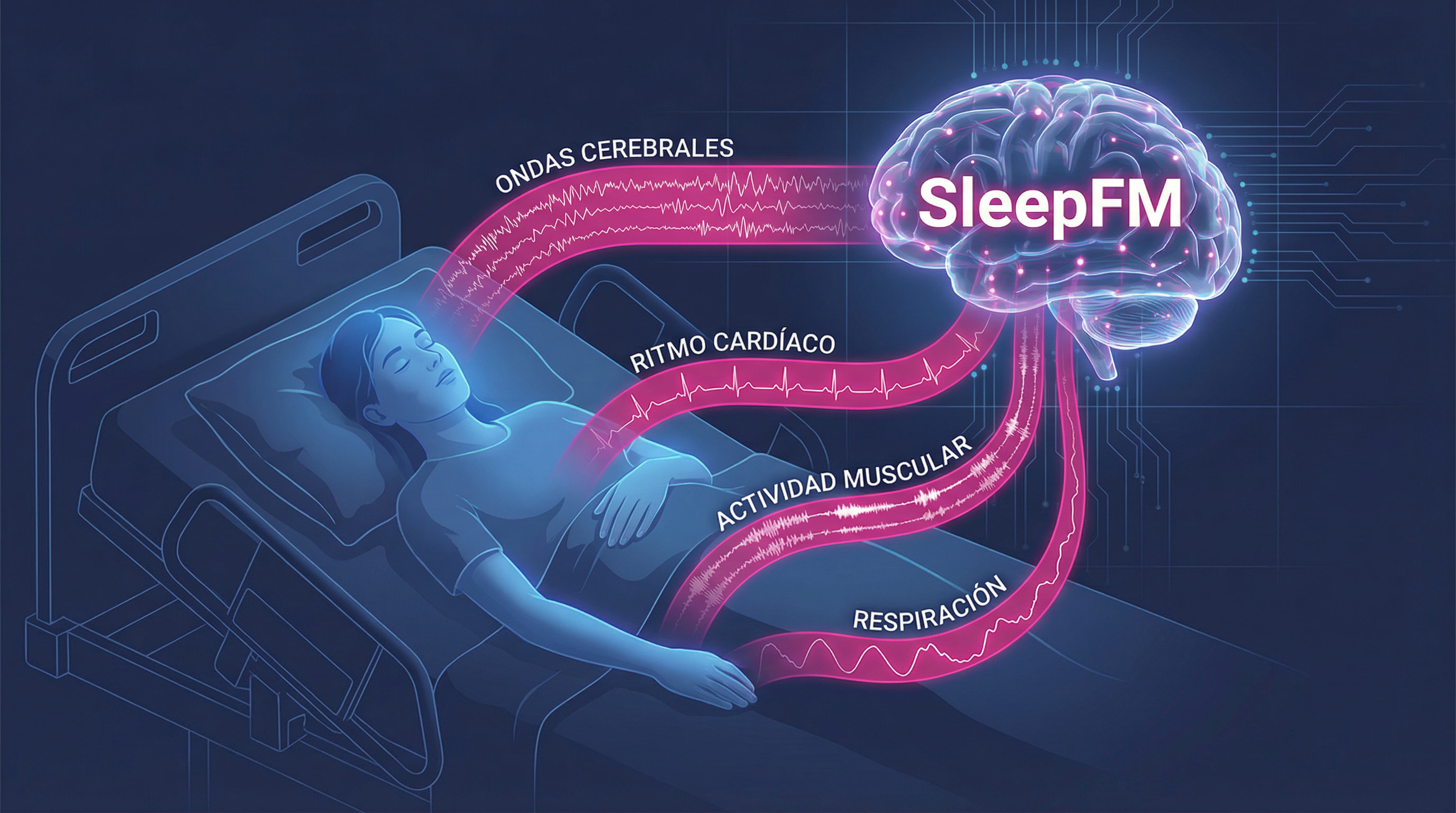
Stanford just published in Nature Medicine an artificial intelligence model called SleepFM that can predict your risk of developing over 130 different diseases by analyzing how you sleep for just one night.
We’re talking about dementia, heart attacks, heart failure, Parkinson’s, various types of cancer, and even your mortality risk.
How is this possible?
While you sleep, your body is telling a story.
Your brain produces characteristic electrical waves, your heart beats with specific patterns, your muscles tense and relax in concrete ways, and your breathing follows a particular rhythm.
SleepFM learned to “read” these four languages simultaneously, something traditional analyses don’t do.
The model was trained with over half a million hours of sleep recordings from tens of thousands of people. But the impressive part came when they tested it with patients it had never seen: it kept working with clinically useful precision.
The science behind it makes sense
Diseases don’t appear overnight: they leave clues years before.
- Alzheimer’s alters your deep sleep patterns long before you notice memory problems.
- Parkinson’s can manifest in how you move during dreams a decade before diagnosis.
- Your nocturnal breathing pattern reveals cardiovascular risks that haven’t shown symptoms yet.
Different signals predict different diseases
Brain activity is especially good at detecting neurological and psychiatric conditions.
Your breathing pattern better predicts metabolic problems.
Heartbeats anticipate cardiovascular diseases.
But the “magic” happens when you combine everything: the whole exceeds the sum of its parts.
Impressive results
SleepFM far surpassed conventional methods that only use age, sex, or weight.
Trained with just 10% of the data, it outperformed traditional models that had seen five times more information.
This means small hospitals could use this technology without needing massive databases.
The model also performs well on classic tasks: it correctly classifies sleep stages and detects apnea with high precision.
Additionally, its flexible design allows it to work with different types of recording equipment, something that has been a historical headache in sleep studies.
Sources
What if your next medical checkup included a night in the sleep lab to detect Alzheimer’s, heart attacks, or cancers years before the first symptoms appear?
Related articles

40 Million People Use ChatGPT Every Day for Health Topics
OpenAI reveals that over 5% of ChatGPT messages are medical queries. Discover how AI is transforming healthcare with surprising data.
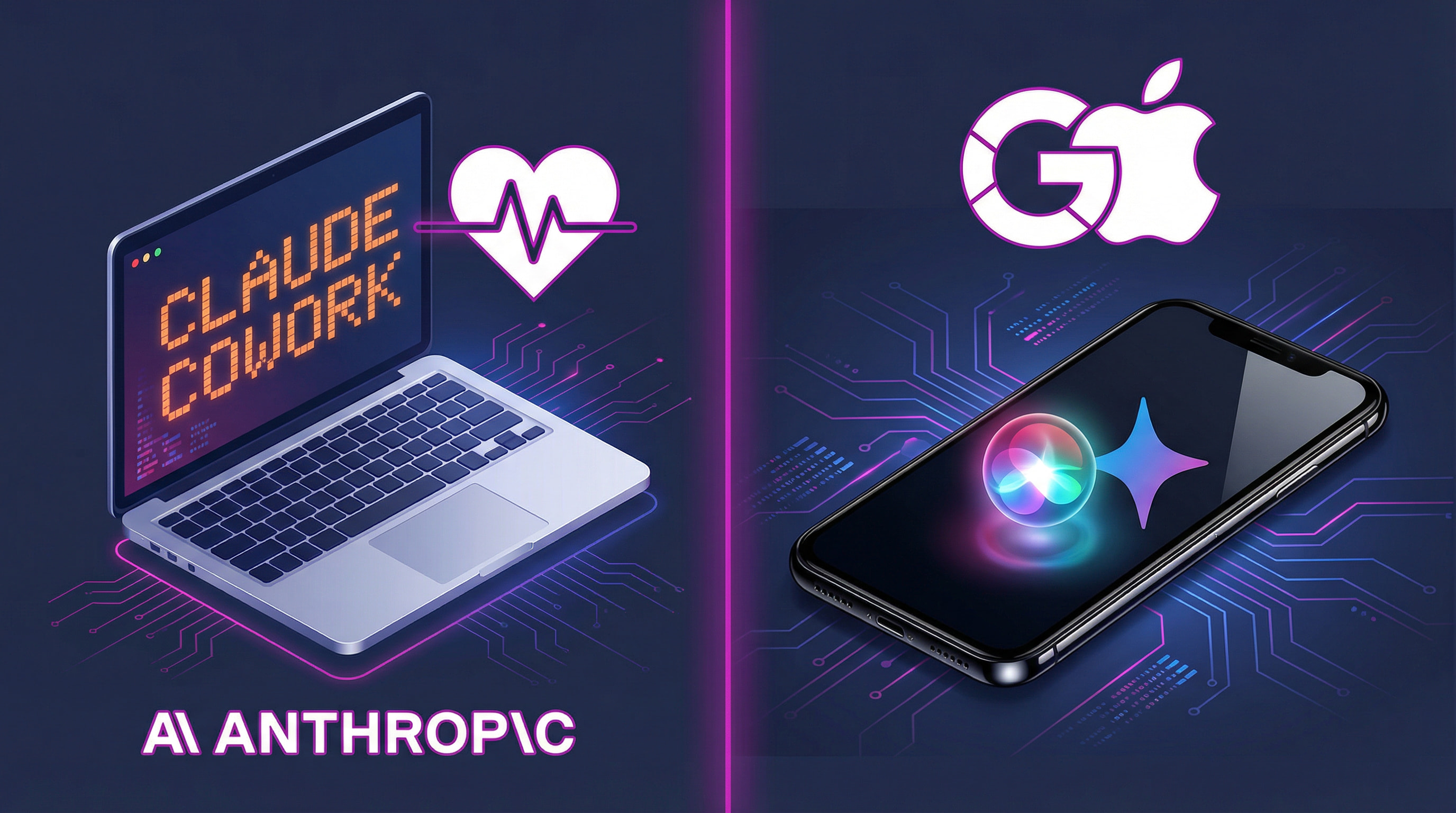
Claude Cowork, Medical AI and the Google-Apple Alliance: 3 News That Redefine the Industry
Anthropic launches Claude Cowork and Claude Health, while Google and Apple close a historic deal. We analyze the three moves shaking up the AI sector.
Psilocybin Rewires the Brain: Scientists Discover How It Breaks Depression Patterns
Cornell scientists map for the first time how a single dose of psilocybin reconnects neurons and breaks negative thought loops in depression.